
The Choice to Be Kind:
Where Real Strength Begins

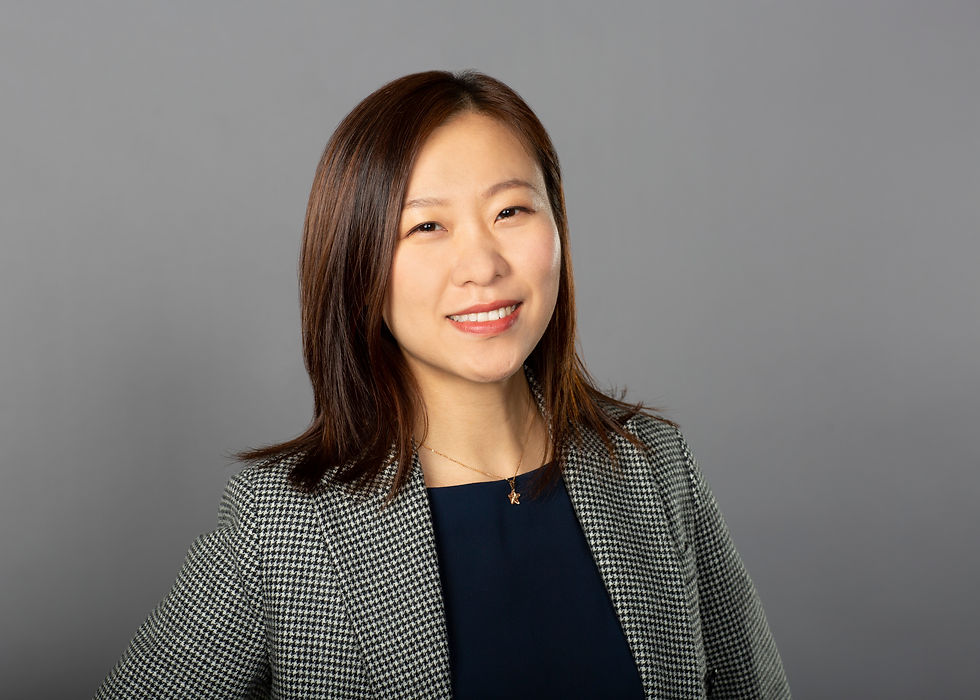


Wendy Owens, founder and CEO of Hexis Biomass, delivered the keynote talk for the two-day 2026 Northern Nevada Diversity Summit. An entrepreneur and environmental innovator, Wendy has built a career at the intersection of science, sustainability, and industry, developing regenerative plant-based raw materials designed to replace wood, fossil fuel-based inputs, and food crops used for fuel across multiple industries.
In this conversation, Wendy joins Assistant Professor Ying Yang from the University of Nevada, Reno Chemistry Department, senior undergraduate student Sarah Ellis, and Jade Magaña, program coordinator for the NSF NRT Chemistry-Biological Interactions Graduate Training Program, to discuss her journey from environmental curiosity to startup founder, the challenges of translating science into scalable solutions, and what it really takes to build something meaningful from the ground up.
Read the transcript for Wendy Owen's episode 00:00 Jade Magaña: Welcome, everyone. Today we are excited to be joined by Wendy Owens, an entrepreneur and environmental innovator who has built a career at the intersection of science, sustainability, and industry. Wendy is the founder and CEO of Hexas Biomass, a company developing regenerative plant-based raw materials designed to replace wood, fossil fuel-based inputs, and even food crops used for fuel across multiple industries. Her work focuses on scaling fast-growing plant systems that can provide sustainable feedstocks while helping restore soil health and reduce pressures on forests. 00:36 Jade Magaña: Before founding Hexas, Wendy built a career that bridges academia, research, and industry, giving her a unique perspective on how scientific ideas move from discovery to real-world impact. Her leadership and vision have been recognized internationally. She was selected as a fellow of the Cartier Women's Initiative, which honors women entrepreneurs creating positive environmental and social change. 00:53 Jade Magaña: Today, we will talk about her journey from environmental passion to startup founder, the challenges of translating science into scalable solutions, and what the next generation of scientists can learn about connecting research with real-world impact. Together with us today are Assistant Professor Ying Yang from the Chemistry Department at UNR, Sarah Ellis, a senior undergraduate student majoring in chemistry, and myself, Jade Magaña, Program Coordinator at the NSF NRT Chemistry-Biological Interactions Graduate Training Program. 01:27 Ying Yang: Hi, Wendy. It's really nice to meet you. My name is Ying, and I'm a polymer materials scientist. My research here at UNR focuses on developing and designing recycled polymers. I'm very happy to meet with you today, especially given our shared interest in the environment and how to address environmental waste issues. I have read about your company and your technologies, and I find them really inspiring. Can you tell us more about your journey founding this company and the technologies you are developing? 02:04 Wendy Owens: I'd be happy to. I founded the company in 2020, but I actually started the research in 2018. I had come across a really fascinating wild-type plant, and I knew from reading the literature that it could potentially have many different applications. I looked at both the science behind the plant and the market for biomass itself. Being a student of history, I looked at what had failed in the past and how not to repeat those mistakes. 02:38 Wendy Owens: I developed and selectively bred these plants so that they are very high-yielding and so that the biochemistry and physical properties of the resulting fiber can go into many different applications, handled by existing facilities — leveraging existing infrastructure and the capital already invested there. I also looked at the market. Was there a gap? Was there a need for this plant? 02:58 Wendy Owens: Honestly, I didn't like seeing trees cut down. I was interested in finding a way to be less wasteful with forestry. The US and Canada are very rich in forests, but the rest of the world really struggles with wood supply. That was the basis for it. I bootstrapped the company for a couple of years, founded it, and went from there. 03:29 Ying Yang: So you really started from one idea and evolved it into something much larger. What is the process behind developing this technology and this grass? 03:47 Wendy Owens: A lot of learning along the way, because this is certainly not my educational background by any stretch. But I had previously built a company in advanced materials engineering, so I knew a great deal about engineering, materials, and raw materials. I had also been part of a founding team for a company in genetics, specifically focused on bleeding disorders and gene therapy. 04:23 Wendy Owens: Plants are not people, and this was already a sterile plant, so I wasn't going to make large advances technologically in that direction. But I knew that because it grew so fast, I could selectively breed it. I gathered what are called land races from all over the world and selected the ones that grew best in poor soils and produced the most biomass. 04:45 Wendy Owens: This grass can not only produce feedstocks for making materials, but it can also remove contaminants from the soil. These kinds of plants are called hyperaccumulators. This particular plant grows very tall — it looks like corn and bamboo had a baby, with corn-like leaves and a long, hollow stalk. To reach 30 feet tall, it draws inorganic materials into its cell walls for structural support, and it will do the same with contaminants like lead, cadmium, and mercury in the soil. 05:30 Wendy Owens: If we can incorporate those materials into recyclable composites and keep them in the material cycle for a long time, we are effectively extracting contaminants from the ground permanently. The plant also sequesters over a ton of carbon per acre per year, breaks up compacted soil, and rebalances the soil biome. It is what's called a pioneer crop: it restores the conditions needed for rewilding or food production to follow. 06:05 Ying Yang: And what are the applications for the grass? 06:12 Wendy Owens: The grass is what we grow, and what we sell is called Zano Fiber. The fiber applications are fairly numerous. Pretty much anything you can do with chopped wood, you can do with this: energy production through direct combustion, particle board, fiberboard, textiles, paper, and biofuels. It is very similar in its properties to softwood, but because it contains both C5 and C6 sugars, it can also be used for ethanol production and sustainable aviation fuel. 06:56 Ying Yang: Starting from that initial idea all the way through to finding collaborators and customers — what have you found most challenging throughout this journey? What kinds of barriers have you encountered? 07:14 Wendy Owens: That's a really good question, and something we were actually talking about at dinner last night. Oftentimes when you have a new idea and a new product you're developing, the people who may become your customers or funders don't quite see how it's all going to work. It sounds good, but they can't fully grasp it. Entrepreneurs are often far ahead of the curve, and from the outside it looks like overnight success — but it was ten years of work. 07:54 Wendy Owens: So the challenge is convincing and educating others. Getting people excited, then educating them, then validating the idea, then motivating them to act. You have to move through all of those steps before you have a commercial product that is both bankable and scalable. Scalability is really important. 08:27 Ying Yang: That resonates with me. In my role as a faculty member, I stress the importance of soft skills constantly — communicating, networking, knowing not just your research but how to promote it and communicate it to the public. And along those lines, work at this scale requires collaboration across many sectors: farmers, technology developers, marketing, government policy. How do you manage that kind of collaboration? 09:20 Wendy Owens: The first thing is being willing to ask for help. That used to be very hard for me, but this is my fourth company, and I have learned that people genuinely like to help. It goes back to networking. It's also important to actively seek out opportunities that provide funding for collaboration — whether that's grant funding or simply a conference where you can present your work. 10:08 Wendy Owens: I was brand new to this field and didn't know anyone in it. I participated in a lot of accelerators, which was very useful — especially since I was at home with kids, not in a major city, and it was during COVID. Through those accelerators I ended up collaborating with cohort members and eventually with national labs. Sometimes a collaboration doesn't work out, and you have to be honest with yourself about that. But you have always learned something. 11:04 Ying Yang: How do you see academia playing a role in that collaboration, from a corporate perspective? 11:12 Wendy Owens: It's an interesting relationship. Everyone in academia means well, and I do currently collaborate with academic researchers. What often gets in the way is university technology transfer offices — it comes down to intellectual property and the monetization of that IP. However, there are universities that handle this smartly, offering more independent arrangements where you simply pay lab collaborators and they do not claim ownership of the IP. 11:52 Wendy Owens: What I find is that professors and academics are very generous with their knowledge, and that generosity is one of the most critical parts of the relationship. It can also open doors for them — including the opportunity to participate as a shareholder just by contributing their time. 12:50 Sarah Ellis: Hi, Wendy. My name is Sarah, and it has been a great pleasure meeting you today. I am a current undergraduate here at the University of Nevada in my final year of a chemistry degree. I have spent time in multiple research labs, including the Desert Research Institute, where I studied fire sciences and the impact of smoke on air quality. I also have a growing interest in polymers. I would love to hear more about how your education led you down your career path and how you got to where you are today. 13:22 Wendy Owens: This is going to surprise you, because it surprises most people: I have a master's degree in classical studies. I studied ancient Greek and Latin, as well as ancient civilizations, literature, and mythology. My degree has nothing to do with my current position — and yet it has everything to do with it. What I found was that I loved it, and it taught me critical thinking. It taught me how to learn, how to think critically, and how to parse language — whether that's scientific language, industry language, or regulatory and policy language. I know it is not the normal path, but it has worked out really well for me. 14:19 Sarah Ellis: That is incredible. I think it is amazing that you followed your passion all the way through your education and were still able to build a career you are so passionate about. Did you ever envision yourself becoming what you are today — working in science, communication, and collaboration at this scale? 14:42 Wendy Owens: No, never. I didn't have a clear vision of what I wanted to be. I was more adventurous in my attitude — I thought, well, let's see what happens. You get to a certain point and you stop and think, "How did I get here? How am I at the University of Nevada doing this?" But you take advantage of the opportunities as they come, you learn everything you possibly can, and that helps you relate to people, opens doors, and that is how I got here. 15:27 Sarah Ellis: I think many students can relate to that — shifting goals and directions throughout university. For students who are more research-focused, do you have any advice on how their research might translate into real-world solutions? 15:48 Wendy Owens: Yes. When something is working in your research and you see its potential, stop and ask yourself whether it could go to commercial scale. Then look at the industry. Look at what others are doing. See if someone is already doing it — because sometimes large corporations may be ahead of you. And if they are, could you collaborate with them? Don't count yourself out. You may be thinking more broadly or more deeply than they are. Make sure you are looking at it from an industry perspective: can you make money from this, and can you scale it? And being a student of history, look back at what others have done in similar spaces — what mistakes did they make, and how can you do it better? 16:53 Sarah Ellis: That is amazing advice. If there is anything you would say to someone who is just finishing their bachelor's degree and thinking about breaking into their passion or starting a company, what would it be? 17:59 Wendy Owens: Entrepreneurship is tough, so if you are going to do it, commit to it. And be honest with yourself. Don't romanticize it. Facts are facts — they are neither good nor bad, they are just facts. Be aware of them. Learn as much as you can about running a business. I knew nothing about it when I started my first company out of graduate school. In hindsight, I learned more from failing than from succeeding, and that is okay. 18:47 Wendy Owens: There are lots of resources — ask for help and take advantage of them. The Small Business Administration has offices everywhere and will walk you through building a business plan for free. NSF and DOE run excellent free accelerators. Do free as much as you can. And prepare. It is not going to happen quickly or easily. No one succeeds overnight. Set realistic expectations. 20:18 Sarah Ellis: How did you get through the setbacks? What support systems did you have in place? 20:30 Wendy Owens: You have to have faith in yourself, and you have to be honest with yourself. When a setback happens, ask: is this just a setback, or is this a signal that the direction is not going to work? My family was a huge support system. Friends. Just having the opportunity to talk about it. And other entrepreneurs — no matter what field you're in or what you're trying to commercialize, you are going through the exact same things. Whether it's difficult people, investors, a grant you didn't get, or cash flow problems, the experience is universal. Lean on that community. And practically: work from home as long as you possibly can. Do not go out and get a fancy office with ping pong tables and beanbag chairs. 21:50 Sarah Ellis: Thank you so much, Wendy. I feel like I am stepping away from this conversation with a much clearer sense of where I might go from here. 21:58 Wendy Owens: I am so glad it made a difference. Thank you for the opportunity. 22:05 Jade Magaña: Hi, Wendy. It's nice to get to chat with you again. I know we got to interact last month when you came for our Tahoe Discovery Lab weekend course and spent time with some of our graduate students. I thought it would be wonderful to share that conversation with a broader UNR community. 22:24 Wendy Owens: I look forward to it. I loved those presentations — they were phenomenal. 22:28 Jade Magaña: What did you think about interacting with our graduate students and hearing about their research? 22:35 Wendy Owens: Graduate students take it to another level in terms of research depth. The students I met were doing real-world work — things that matter right now, ecologically. From saving newts, to working with spiders, to studying plants in Costa Rica. That is work that will eventually reach commercial markets or inform conservation efforts at the state and national levels. It was phenomenal. 23:06 Jade Magaña: Our program, coordinated through NSF's National Research Traineeship grant, focuses on interdisciplinary collaboration between chemistry and ecology students, as well as developing professional soft skills. Could you speak to why soft skills and building connections are so important for the next generation of scientists? 23:50 Wendy Owens: We are human beings. That is fundamentally what we are about — making connections. The research the graduate students are doing is something people can understand and relate to. You can talk about butterflies, newts, and plants with anyone. "What do you do?" "I study butterflies." Who doesn't respond to that? Those small personal connections open people up, and from there wider conversations follow. Very quickly, you can find opportunities for collaboration, knowledge sharing, or an introduction to exactly the right person. 24:36 Wendy Owens: Soft skills are not just for socializing — they are critical for your career. If you believe your research is important to the world, you will have to communicate that to the world. And it may not be through academic papers. It might be a TikTok video of dancing butterflies. People connect to those things, and you never know where those connections will lead. 25:24 Jade Magaña: That is so important. We work hard to build those skills in our students — through science communication, K-12 outreach, and engagement with industry partners like yourself. And I think a challenge many graduate students face is imposter syndrome. Do you have any advice for navigating that? 25:55 Wendy Owens: You just have to say: I am who I am. I am good at what I do. And you have to trust in yourself. It is not something you can learn from a book — it comes from inside. We should not be embarrassed by how intelligent and capable we are. The world does not always reward intelligence visibly the way it rewards other things, but without scientists and researchers, where would we be? Look hard at the value of your contribution — not just today, but far into the future. 26:45 Jade Magaña: And speaking of learning everything — I think back to our conversation about the seed bank and the walk-in refrigerators, and how you described being a kind of jack of all trades. You have had to learn things completely outside your training. How do you find the drive to keep learning all of those tangential skills? 27:10 Wendy Owens: When you are an entrepreneur, you are wearing all the hats. If you have to learn how to dig a hole, drive a tractor, or at least know who to call to repair an HVAC system and be able to have that conversation — there is really no choice. You are not moving forward unless you learn these things. You just have to, as I say, suck it up, buttercup. There is a little MacGyvering involved. AI is genuinely helpful now for guidance. YouTube videos work too. But the important thing for students to understand is that life is not a single skill. No matter what you are doing, you will need multiple capabilities. If you run out of gas, you go get gas. If you get a flat tire, you change the tire. That is not science — it is just what you do. 28:45 Jade Magaña: That is so wonderful. Thank you so much for this conversation. We are all so excited to hear you speak at the Northern Nevada Diversity Summit tomorrow. Thank you again for visiting the University of Nevada. 28:58 Wendy Owens: Thank you.
Wendy Owens
Founder & CEO, Hexas Biomass
Wendy Owens is a seasoned entrepreneur with a track record of innovation across diverse industries. She is the Founder and CEO of Hexas Biomass, a pioneering nature-based solutions company that develops sustainable, plant-based raw materials for use in bioenergy, advanced composites, and both structural and nonstructural applications. At Hexas, Wendy combines her expertise in materials engineering and biotechnology with a lifelong commitment to environmental stewardship and climate resilience.
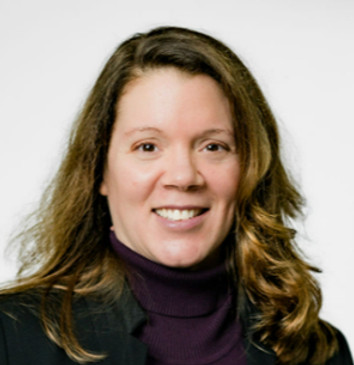
In addition to her entrepreneurial work, Wendy served for 14 years as an executive-level appointee advising both the U.S. Secretary of Commerce and the U.S. Trade Representative on global economic trade policy. Her career across both the private and public sectors reflects a rare blend of technical innovation, strategic leadership, and civic engagement. She is also a published author on a wide range of topics and holds a Master of Arts degree from Tufts University.
